Suggested Answers #
Use these suggested answers to verify your understanding of Organic Chemistry concepts, hydrocarbon naming, reactions, and practical tests.
Question 1 #
- (a) C5H12.
- (b) Pentane.
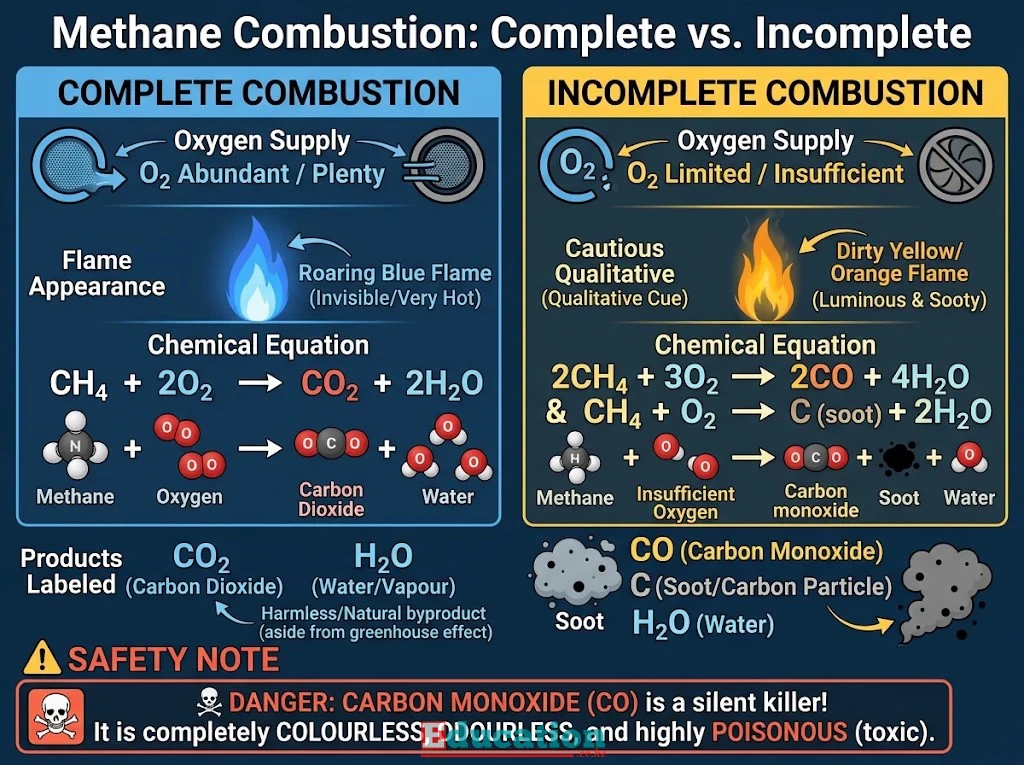
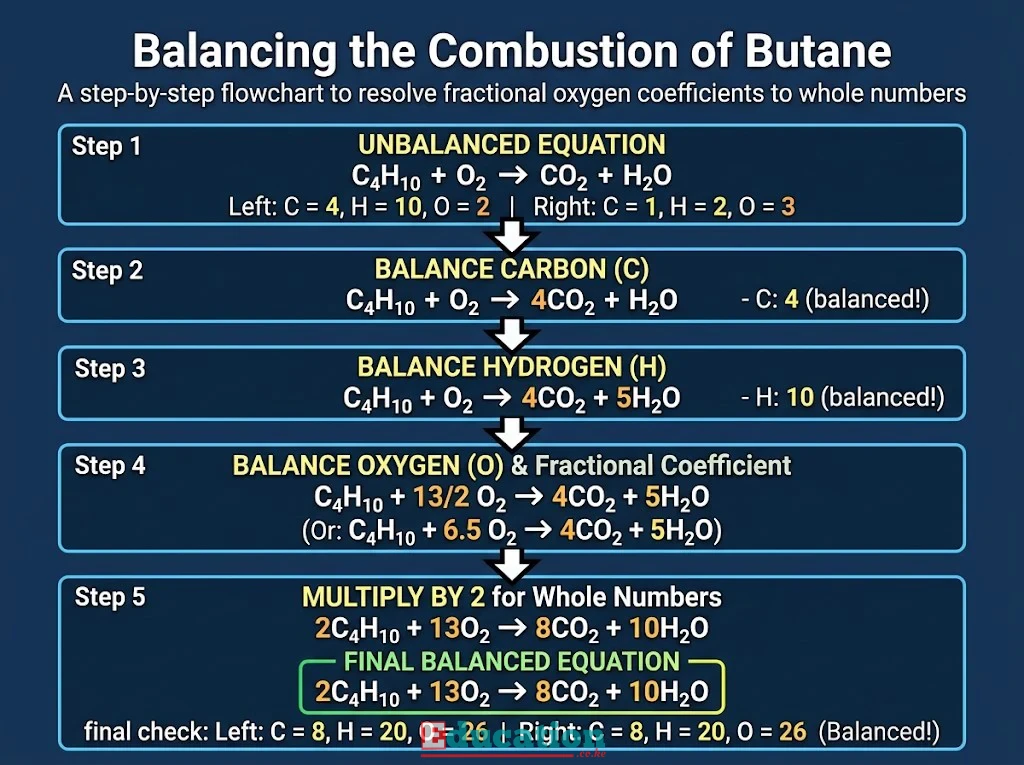
- (c) C5H12 + 😯2 → 5CO2 + 6H2O.
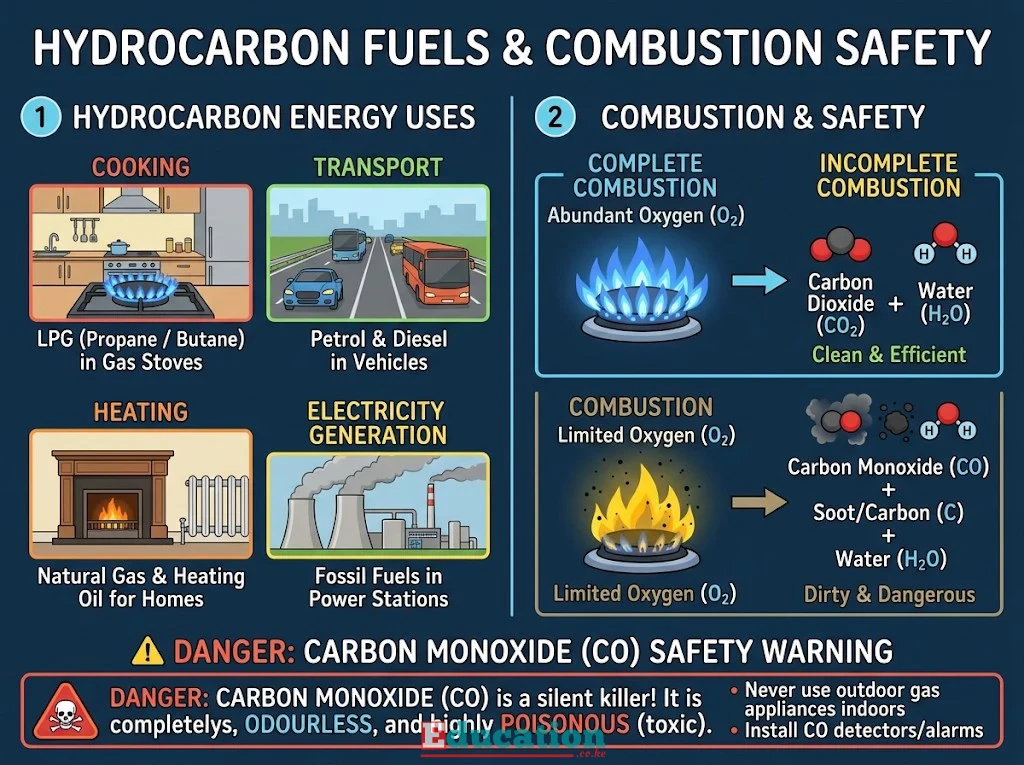
- (d) Incomplete combustion can produce poisonous carbon monoxide and soot.
Question 2 #
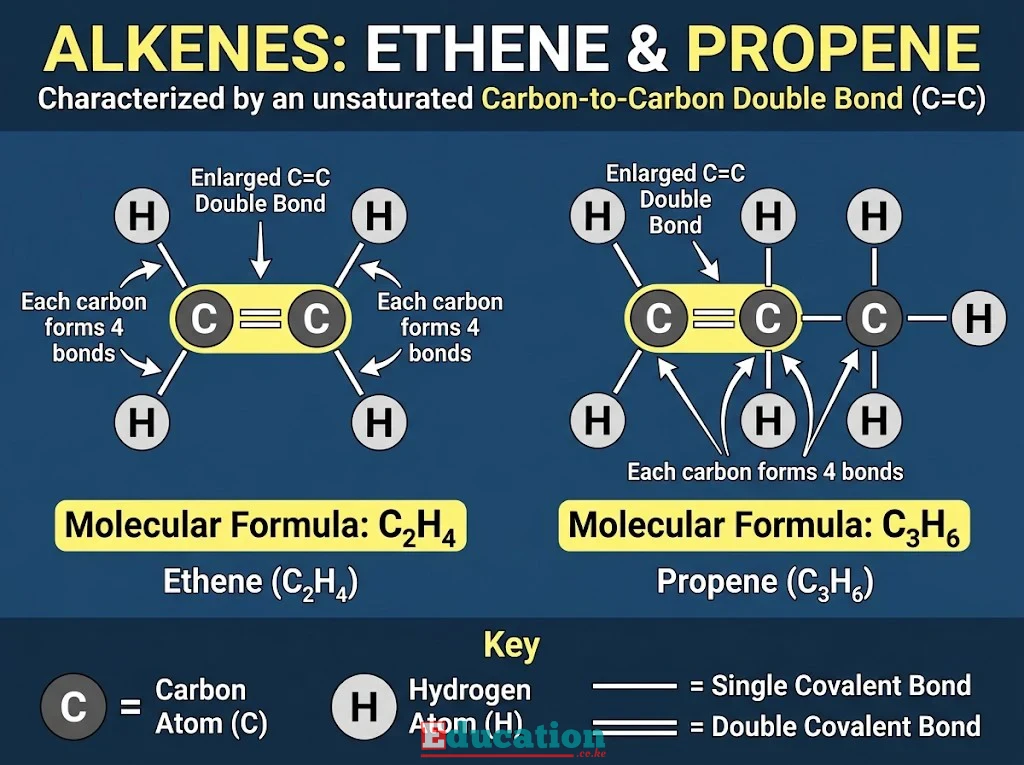
- (a) It may be an alkene with one double bond.
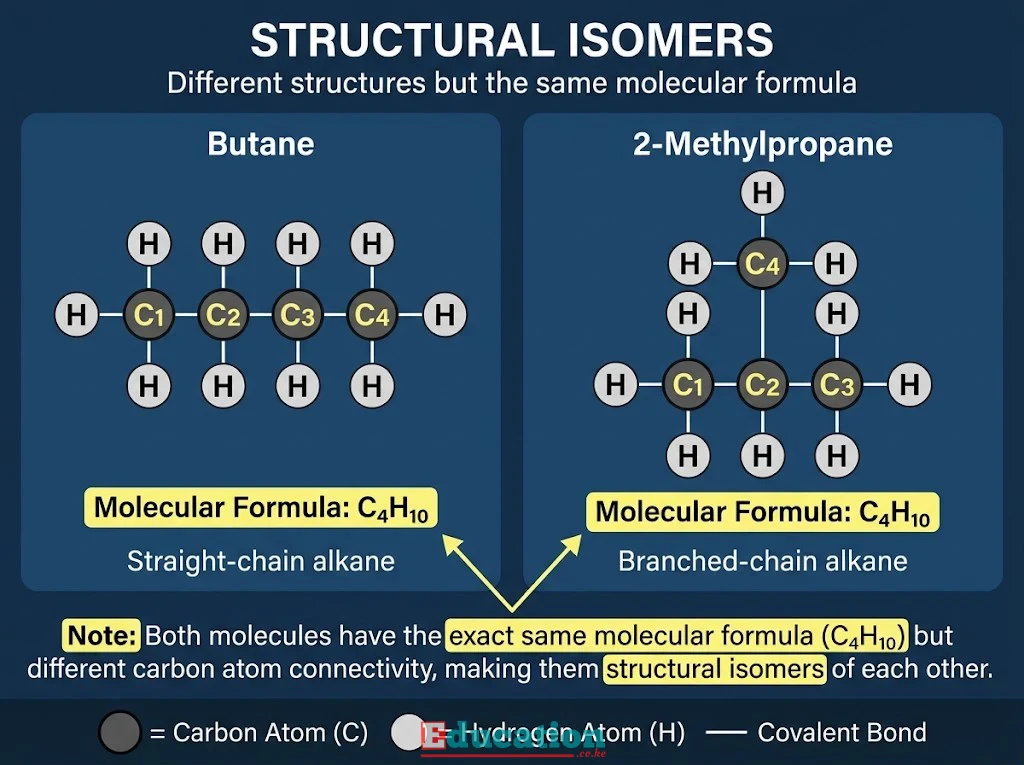
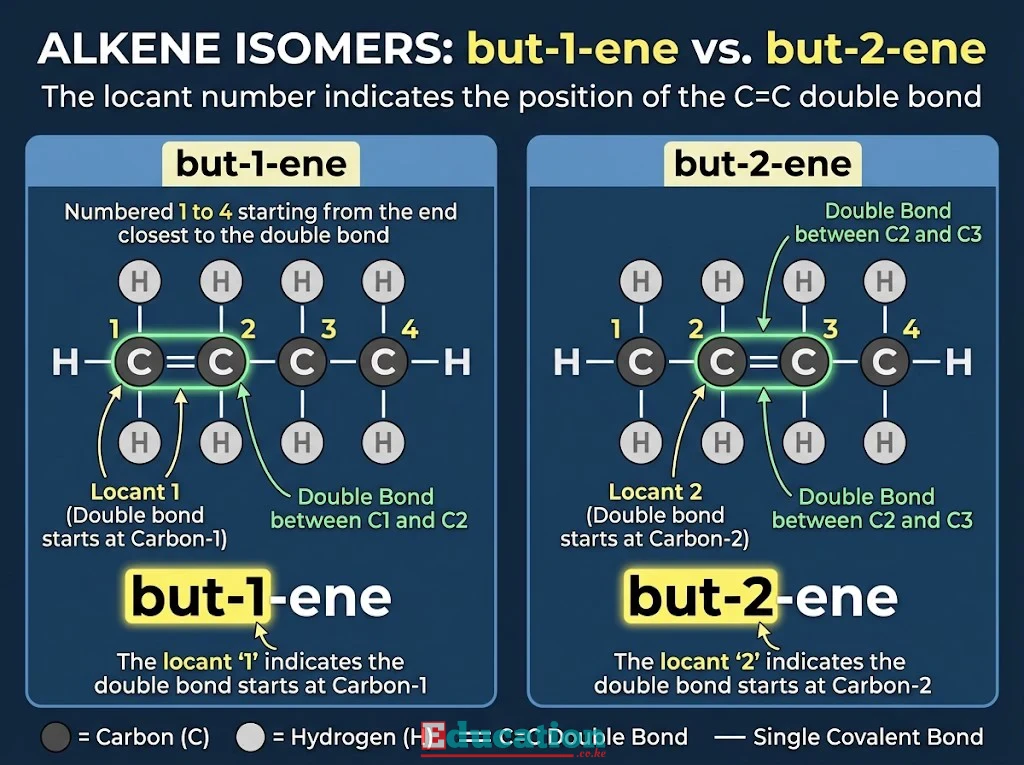
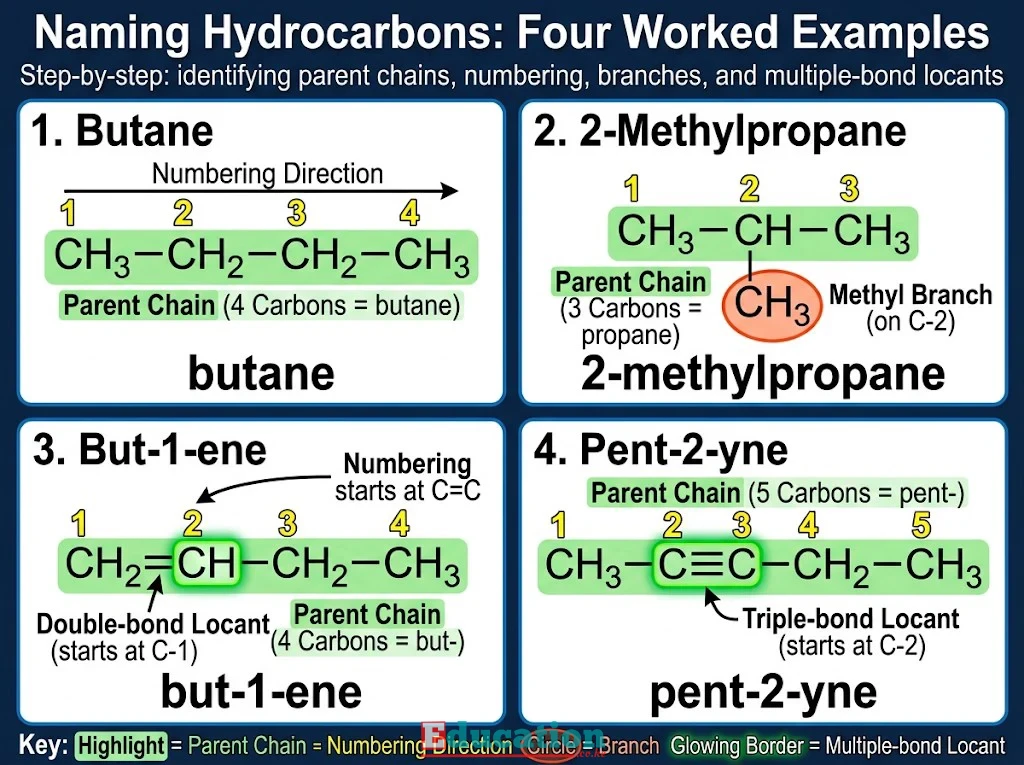
- (b) Possible examples include but-1-ene and but-2-ene; 2-methylpropene is also an isomer.
- (c) But-1-ene.
- (d) Different connectivities can share the same formula.
Question 3 #
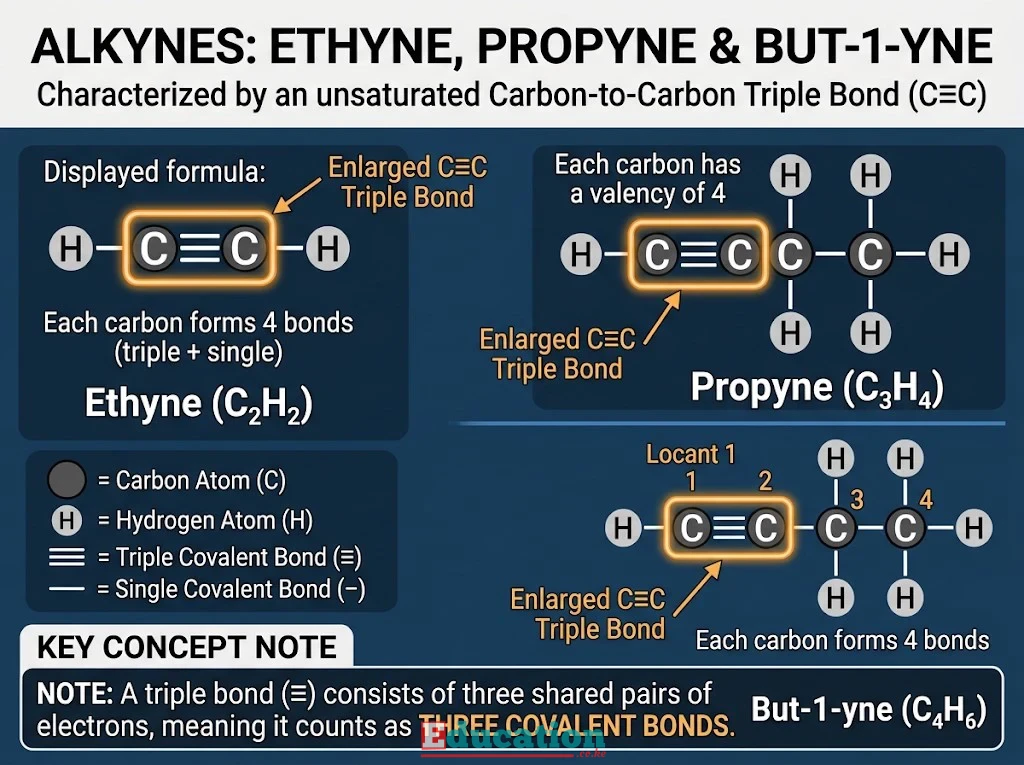
- (a) Alkyne.
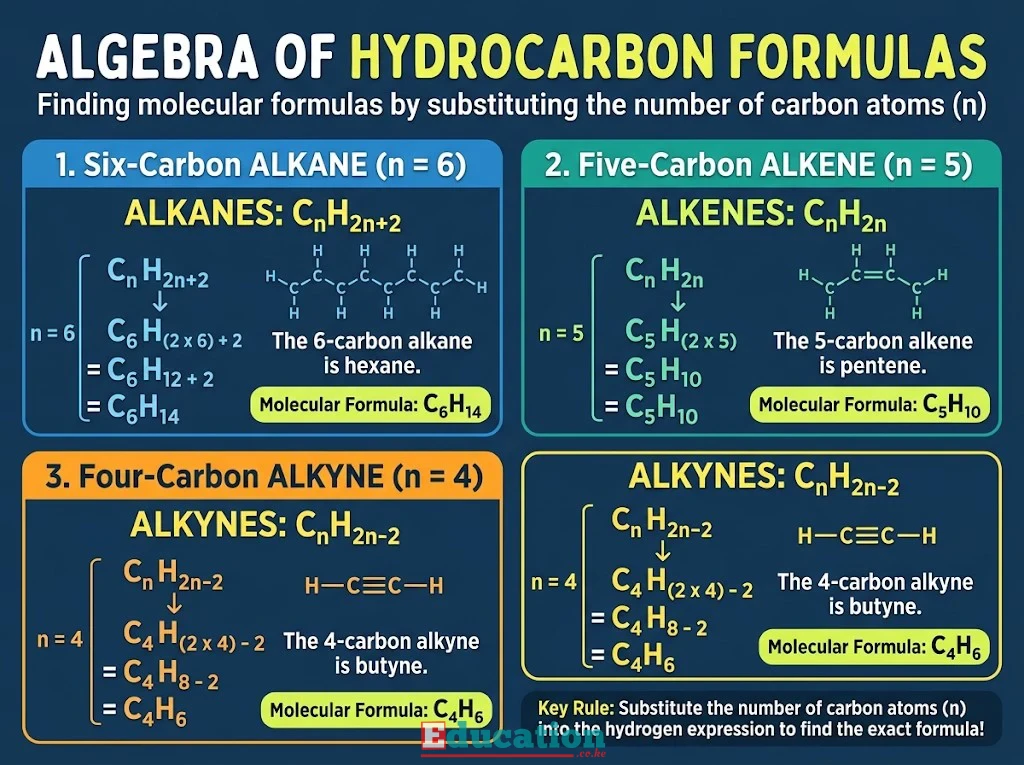
- (b) C4H6.
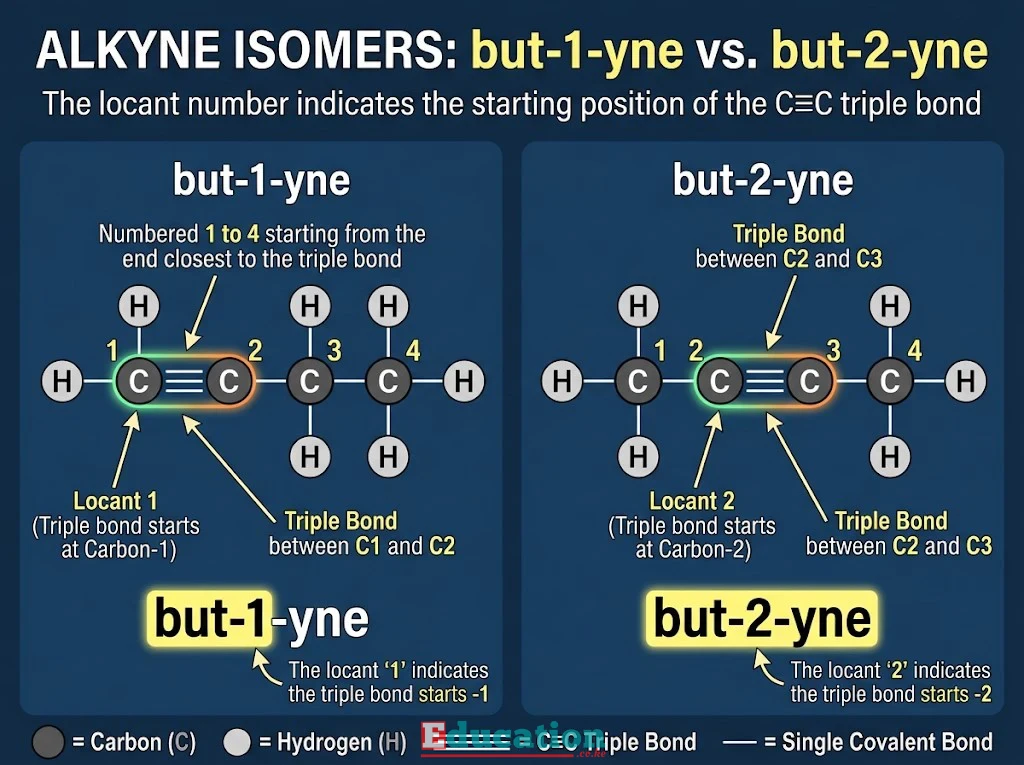
- (c) But-1-yne is HC≡C–CH2–CH3; but-2-yne is CH3–C≡C–CH3.
- (d) The locant identifies the first carbon in the triple bond.
Question 4 #
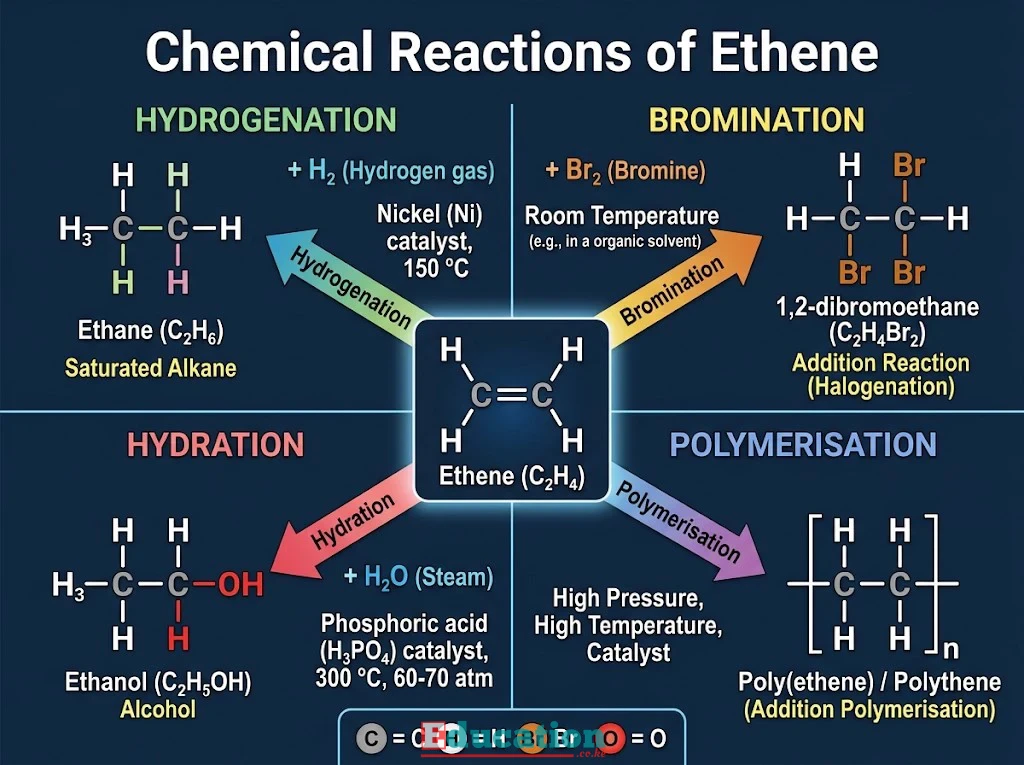
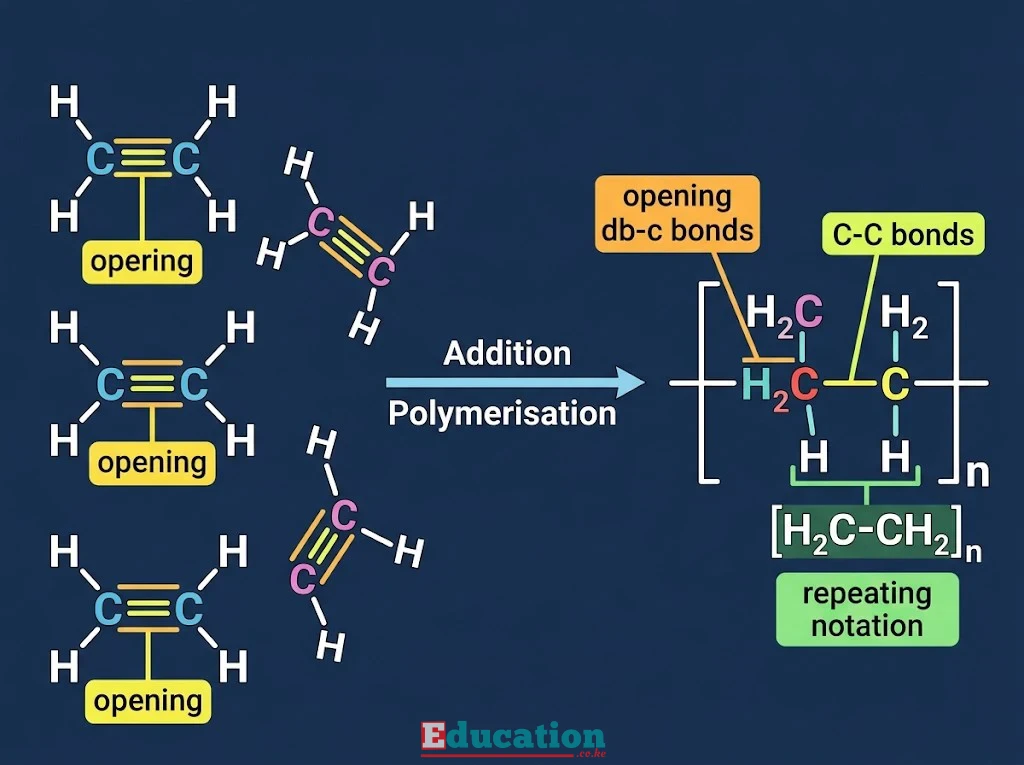
- (a) Addition polymerisation.
- (b) [–CH2–CH2–]n.
- (c) Poly(ethene) can be lightweight and mouldable.
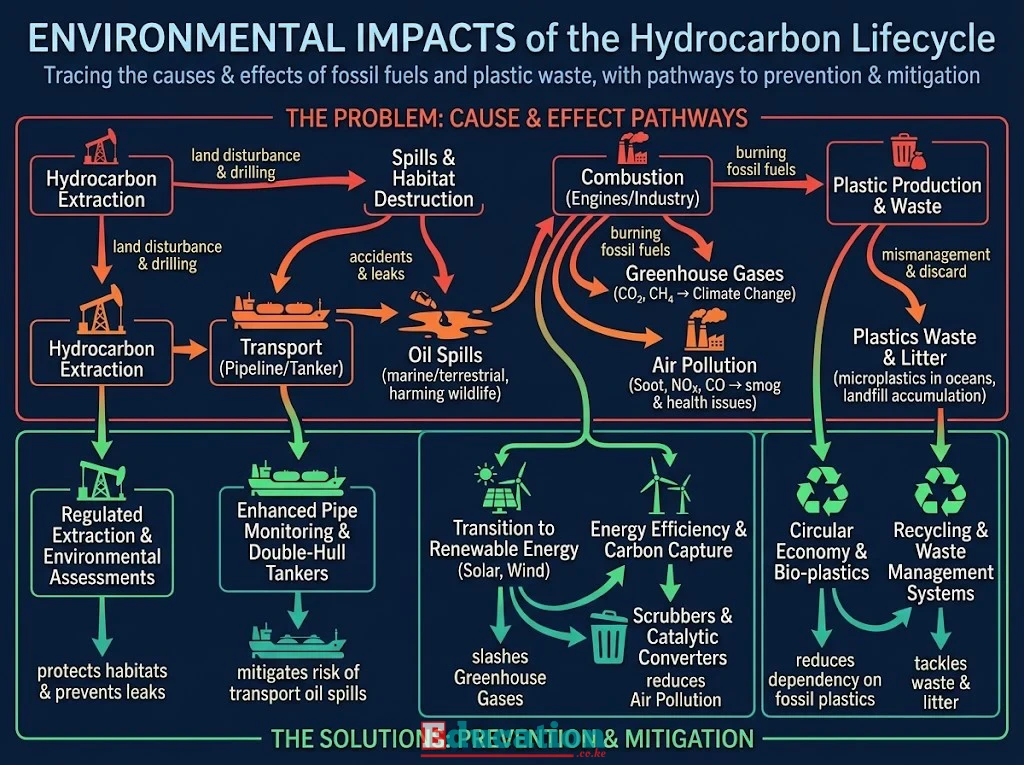
- (d) Persistent waste can accumulate; reduction, reuse and appropriate recycling help.
Question 5 #
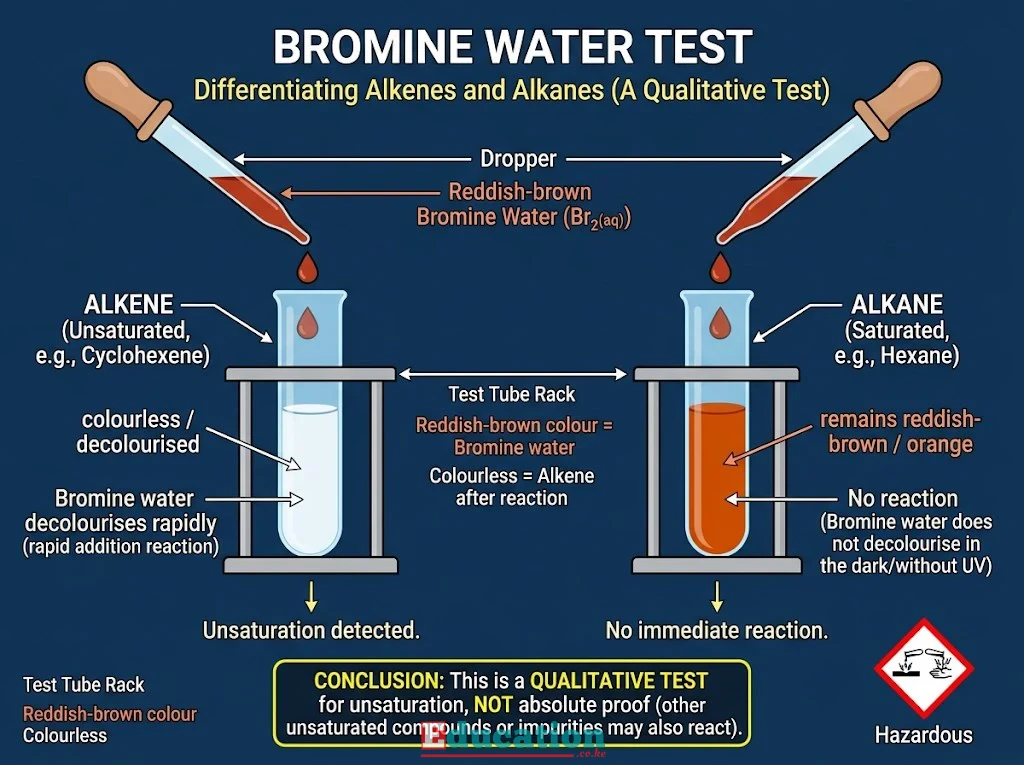
- (a) Sample A is consistent with an unsaturated compound such as an alkene; Sample B may be saturated under the test conditions.
- (b) Bromine adds across the carbon–carbon double bond, consuming coloured bromine.
- (c) Other reactive substances can also affect the reagent and a negative result is not conclusive by itself.
- (d) Use eye protection, small quantities and approved waste handling.
Self-Assessment Checklist #
I can classify simple hydrocarbons; apply the general formulae with the correct assumptions; draw valid displayed and condensed formulae; name straight-chain and simple branched hydrocarbons; identify structural isomers; balance combustion equations; explain substitution, addition and polymerisation; describe the bromine-water test; and discuss safe and sustainable hydrocarbon use.
Where a learner is unsure, return to the relevant worked example and reproduce the method with a new compound. For naming, practise parent-chain selection before punctuation (see Naming Alkanes and Naming Alkenes). For equations, count atoms on both sides. For practical questions, distinguish observations from conclusions and include relevant safety controls.
Check Your Understanding #
- Rate confidence from 1 (needs support) to 4 (can teach someone else).
- Choose two weak areas and revise them.
- Create three original naming questions and answer them.
- Explain one way chemistry can support safer and more sustainable use of hydrocarbons.
Glossary of Key Terms #
Term |
Definition |
|---|---|
Addition reaction |
A reaction in which atoms or groups add to a molecule, often across a multiple bond. |
Alkane |
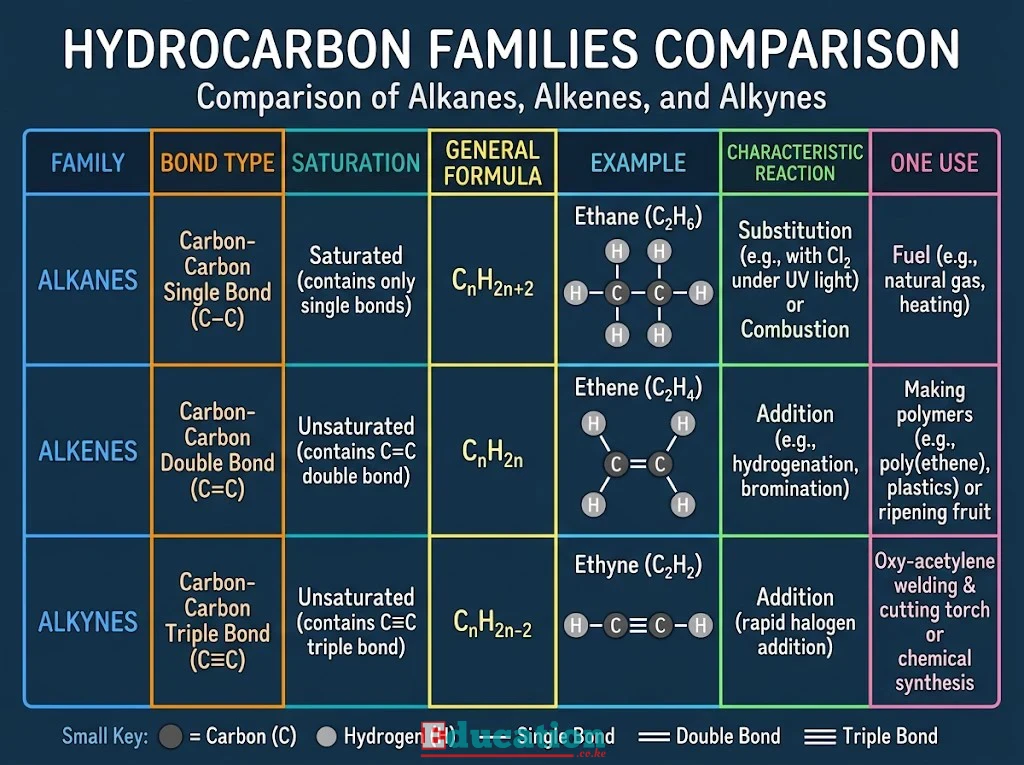
A saturated open-chain hydrocarbon with only carbon–carbon single bonds. |
Alkene |
An unsaturated hydrocarbon containing a carbon–carbon double bond. |
Alkyne |
An unsaturated hydrocarbon containing a carbon–carbon triple bond. |
Branch |
A carbon group attached to the parent carbon chain. |
Combustion |
Reaction with oxygen that releases energy. |
Displayed formula |
A representation showing atoms and covalent bonds. |
Homologous series |
A family of compounds with a common structural pattern and related properties. |
Hydrocarbon |
An organic compound containing only carbon and hydrogen. |
Isomers |
Compounds with the same molecular formula but different arrangements of atoms. |
Monomer |
A small molecule that can join with others to form a polymer. |
Polymer |
A large molecule made from many repeating monomer-derived units. |
Saturated |
Containing only carbon–carbon single bonds in the carbon skeleton. |
Structural formula |
A representation showing how atoms are connected. |
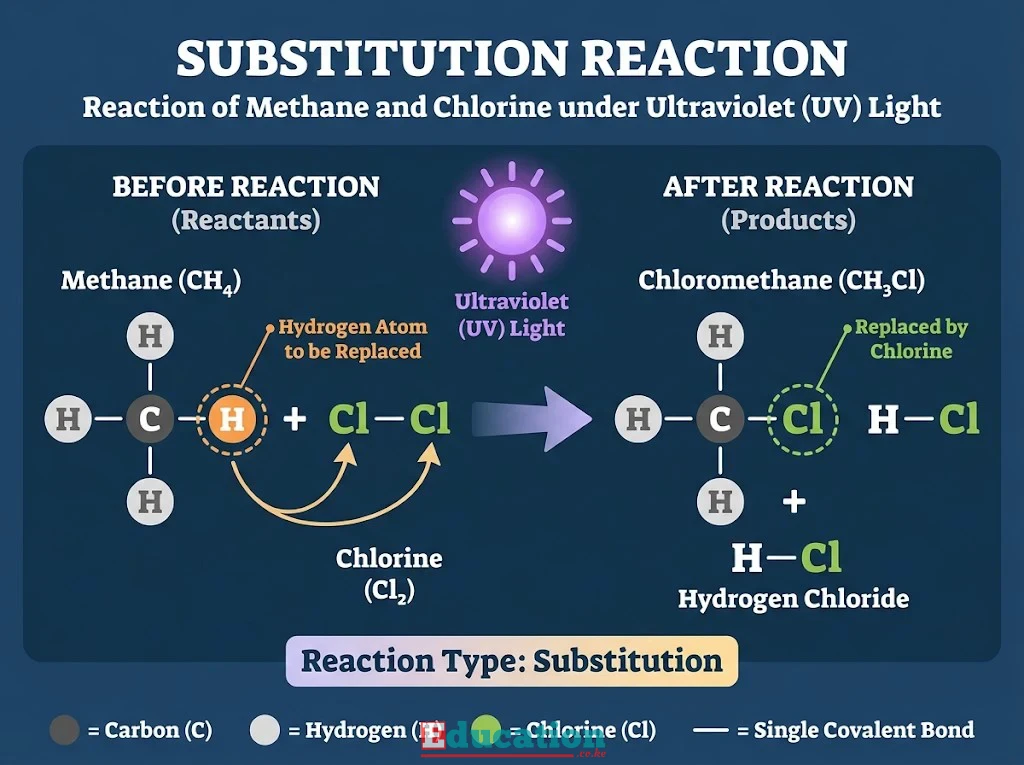
Substitution |
A reaction in which an atom or group is replaced by another atom or group. |
Final Revision Checklist #
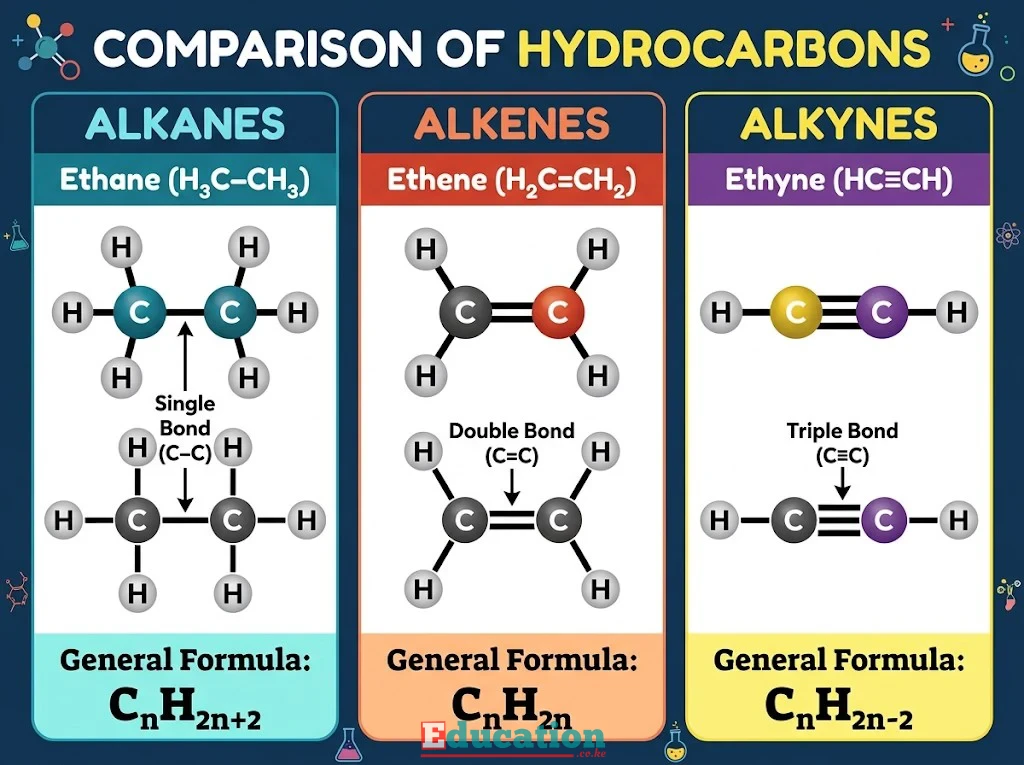
- I can classify hydrocarbons by their bonds and apply the appropriate general formula.
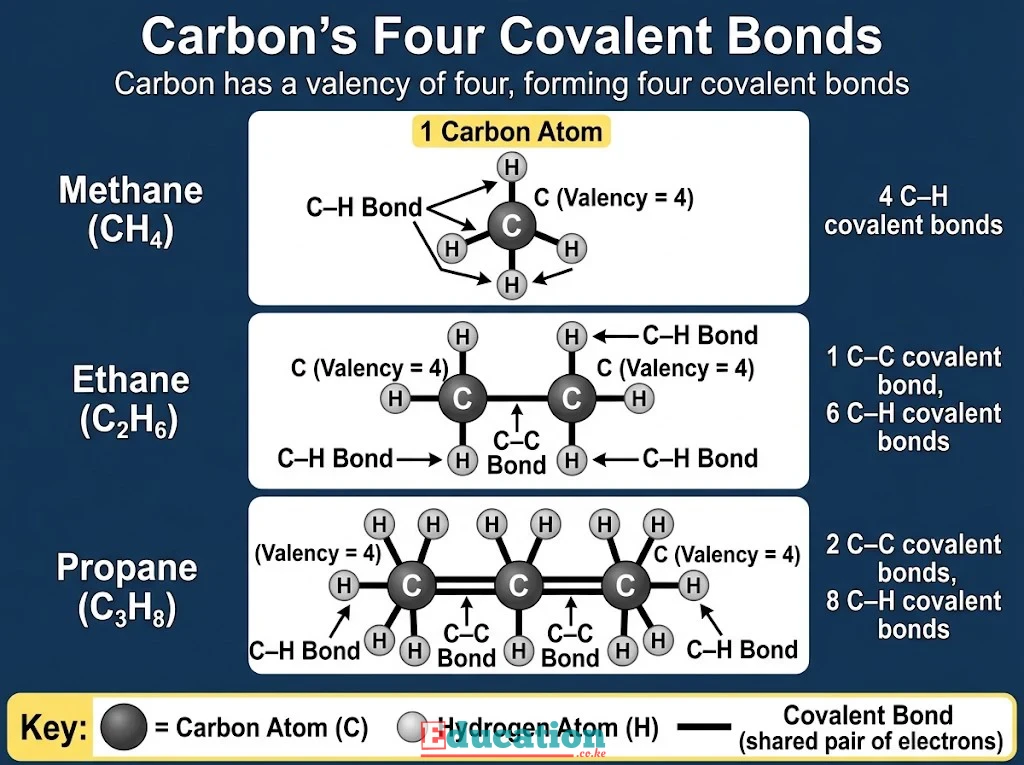
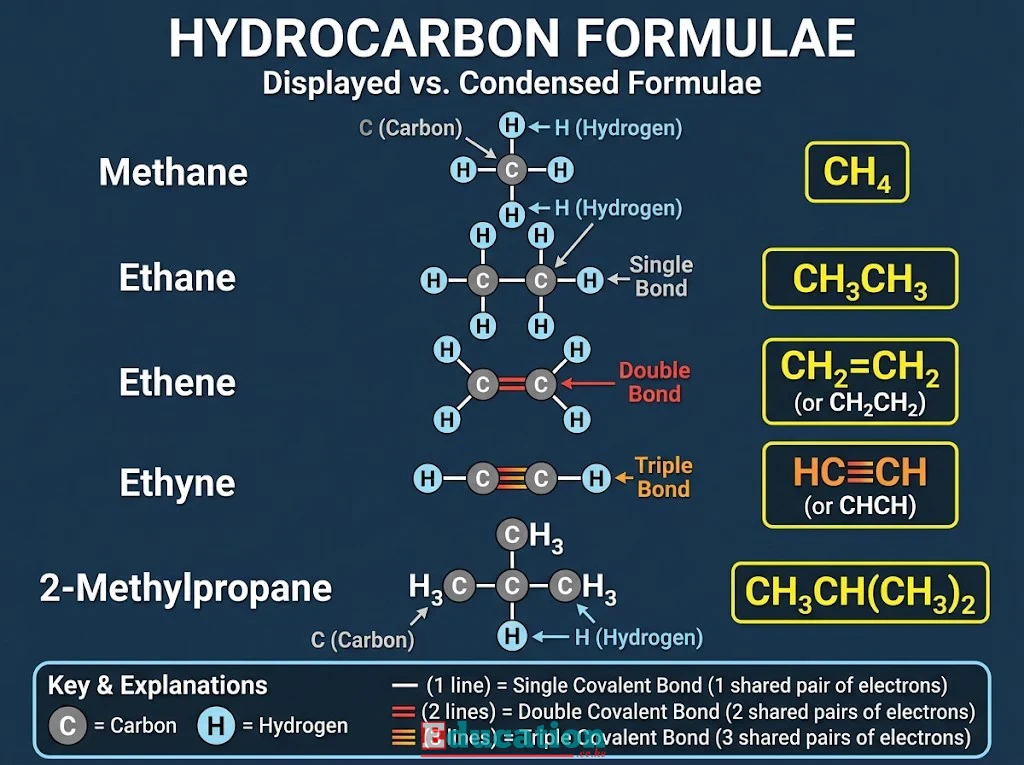
- I can draw and interpret displayed and condensed formulae while respecting carbon valency.
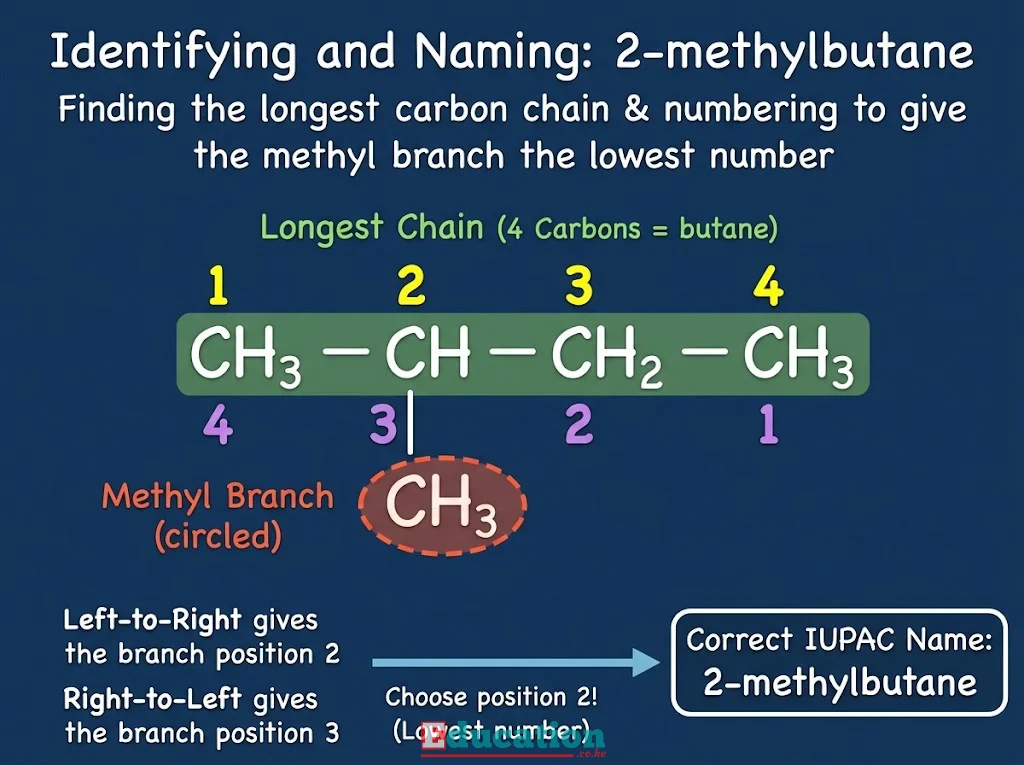
- I can name straight-chain and simple branched alkanes, alkenes and alkynes.
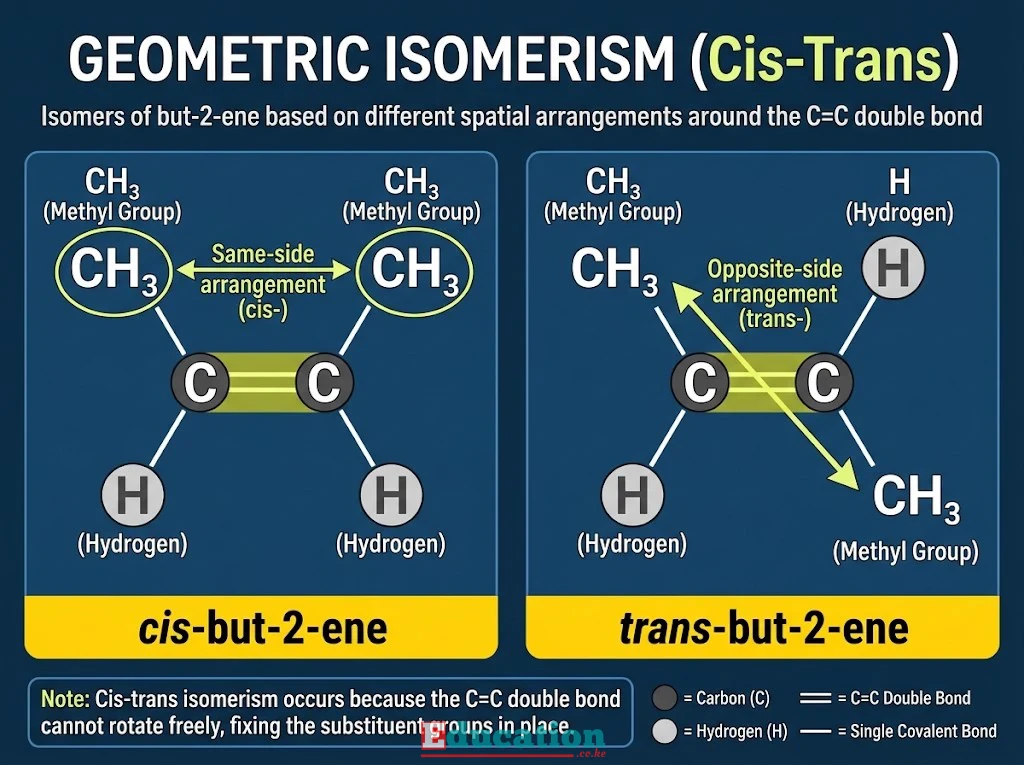
- I can explain structural isomerism and the conditions needed for cis–trans isomerism.
- I can balance combustion equations and describe selected addition reactions.
- I can explain the bromine-water test and identify its limitations.
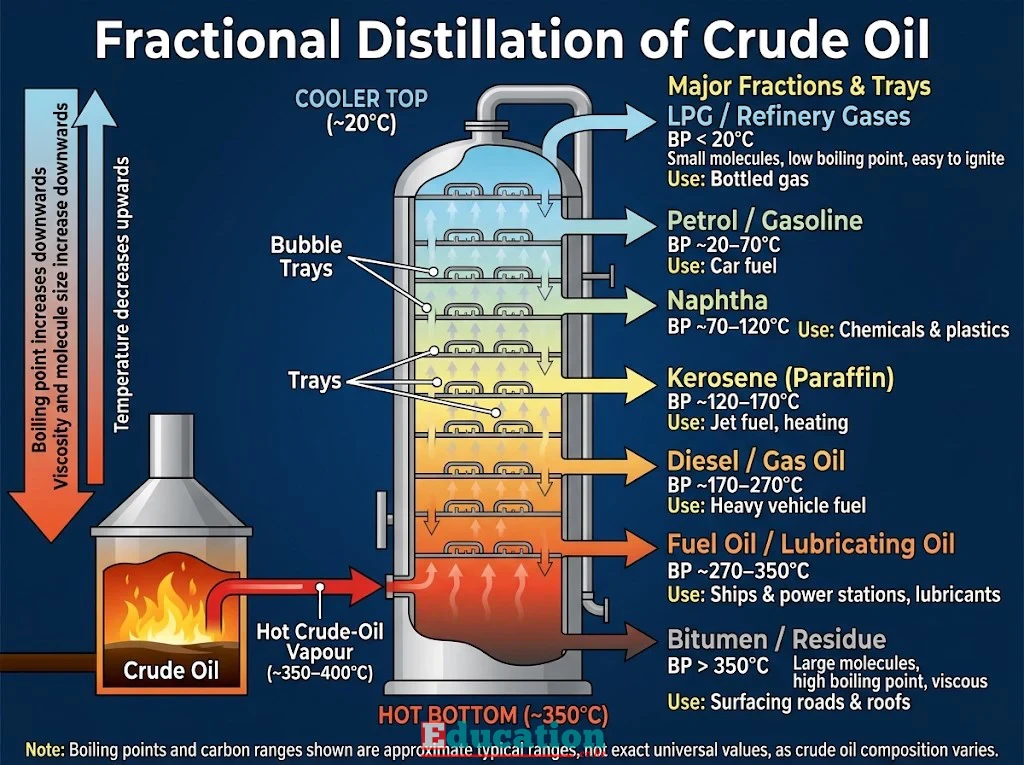
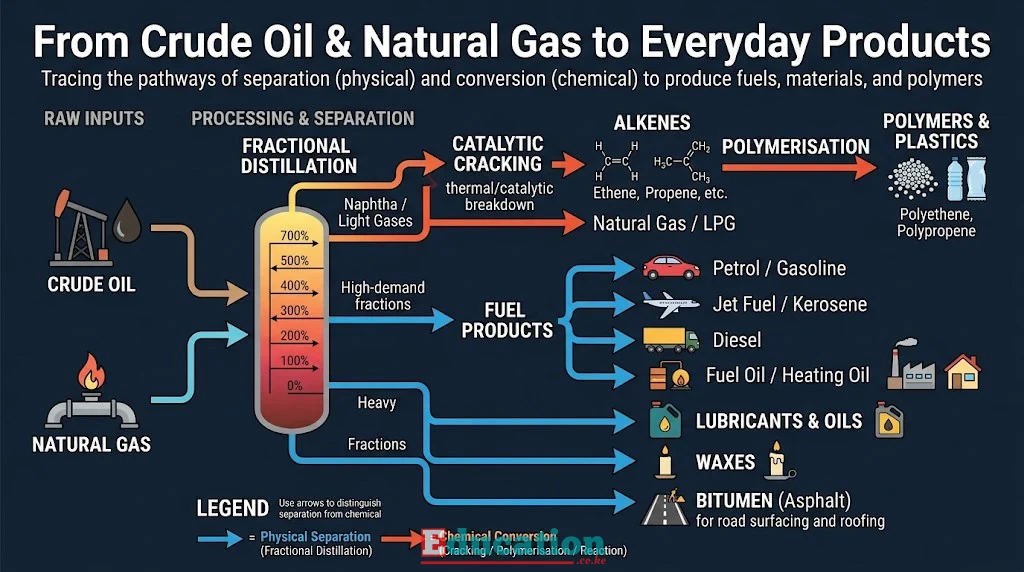
- I can describe petroleum fractionation, cracking and addition polymerisation.
- I can discuss hydrocarbon uses, practical safety and environmental sustainability.
Key Diagrams & Illustrations #
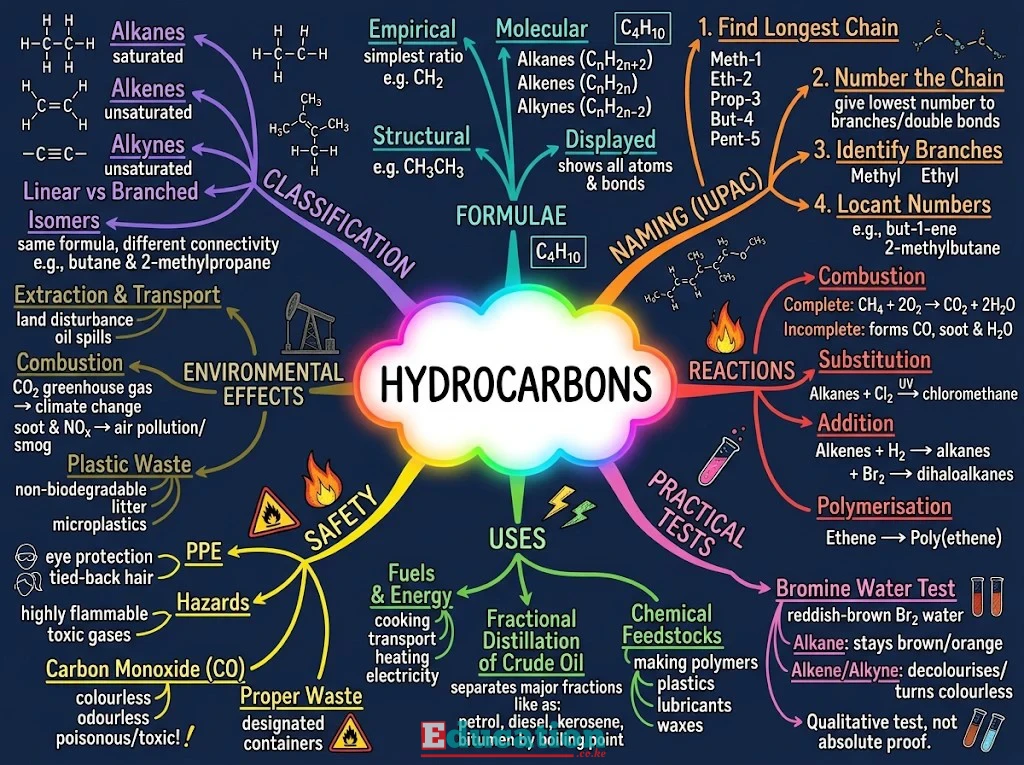
Compiled and reviewed for Education.co.ke by Fred ArapToo (B.Ed. Physics & Chemistry, Egerton University; M.Ed. Education Administration candidate, University of Kabianga; Experience AI Certified Educator — Google DeepMind, Raspberry Pi Foundation & YSK, 2025; national KSEF facilitator, patron and evaluator; EdTech and open-access education platforms innovator; secondary school science educator with 15+ years of experience).
Looking for more resources?
- Revision & past papers: Teacher.co.ke | Education.co.ke | Teacher.ac
- Career pathways & university placement guide: CareerMap.co.ke
- School management systems & related digital applications: Contact us via Teacher.co.ke or ShuleMax.co.ke