Focus: Acute and chronic injuries; common injuries; first-aid application and prevention.
1.6.1 Meaning of Sports and Recreation Injuries
A sports or recreation injury is damage to body tissue or a body structure that occurs during physical activity, sport, exercise, or recreation. Injuries may affect muscles, tendons, ligaments, bones, joints, skin, the head, or other body systems. They can result from a sudden event, repeated stress, unsafe equipment, poor technique, environmental conditions, or contact with another person or object.
Not every ache is a serious injury, but pain, swelling, loss of function, or unusual symptoms should be taken seriously. Learners should not attempt to make a definitive medical diagnosis. Their role is to recognise that something may be wrong, stop the activity, protect the person, and seek appropriate assistance.
1.6.2 Categories of Injuries: Acute and Chronic
Acute Injuries
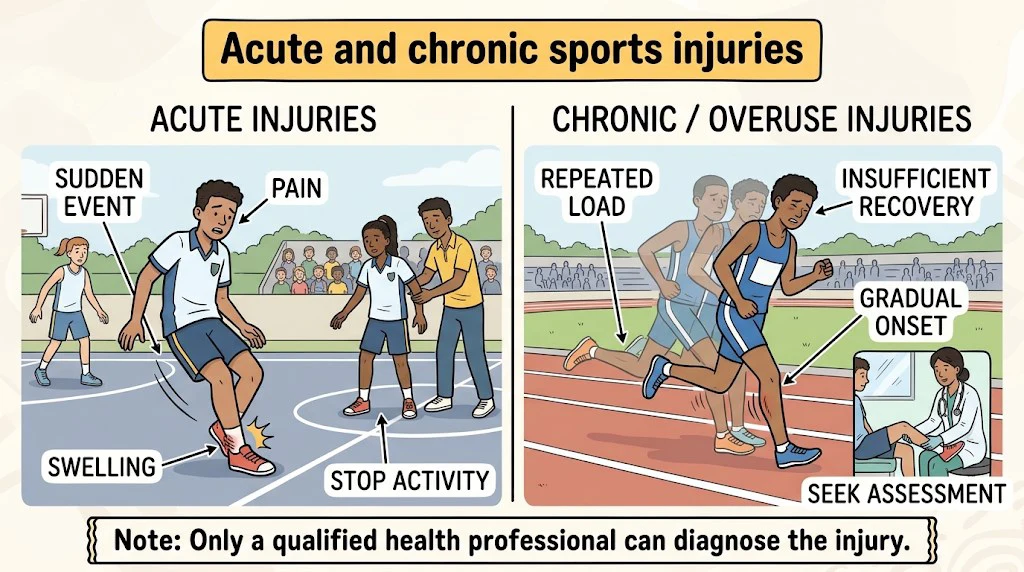
An acute injury occurs suddenly, often after a specific incident such as a fall, collision, twist, impact, or awkward landing. Symptoms may appear immediately and can include pain, swelling, bruising, bleeding, deformity, or difficulty using the affected body part.
- A sprain after twisting an ankle while landing.
- A strain after suddenly overstretching a muscle.
- A fracture after a fall or collision.
- A dislocation after a forceful impact to a joint.
- A cut or abrasion after contact with a rough surface.
- A sunburn after excessive exposure to ultraviolet radiation.
Chronic Injuries
A chronic or overuse injury develops gradually, often because repeated activity places stress on a body structure without sufficient recovery. Symptoms may begin mildly and become more noticeable over time. Contributing factors include a sudden increase in training load, repeated poor technique, unsuitable footwear, inadequate recovery, or training on inappropriate surfaces. Understanding Principles of Training helps learners avoid sudden training overload.
- Persistent tendon pain associated with repeated loading.
- Stress injury to bone caused by repeated impact and inadequate recovery.
- Overuse-related pain around the knee or lower leg.
- Persistent shoulder discomfort associated with repeated overhead movements.
Feature |
Acute injury |
Chronic / overuse injury |
|---|---|---|
Onset |
Usually sudden. |
Usually gradual. |
Typical cause |
A specific event such as a fall, twist or collision. |
Repeated stress, excessive load or insufficient recovery. |
Signs |
Immediate pain, swelling, bruising or loss of function. |
Discomfort that worsens with activity. |
Example |
An ankle sprain during a game. |
Persistent tendon pain after repeated training. |
Initial response |
Stop activity, protect the area and seek assessment. |
Reduce or stop aggravating activity and obtain assessment. |
1.6.3 Common Sports and Recreation Injuries
A. Sprains
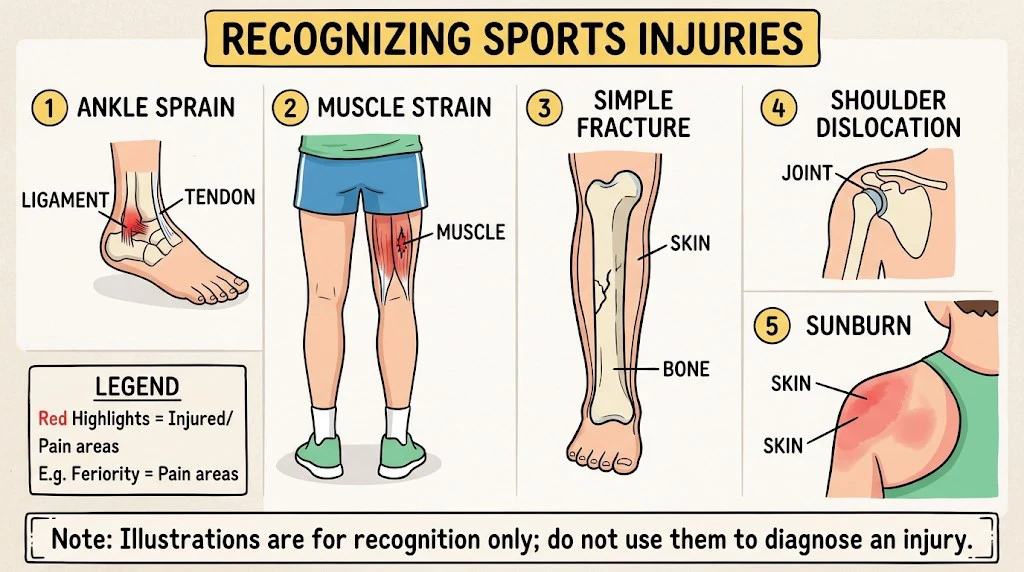
A sprain is an injury to a ligament. Ligaments are strong bands of connective tissue that connect bones to one another and help stabilise joints. A sprain may occur when a joint is twisted, stretched beyond its normal range, or subjected to force. The ankle, knee, and wrist are common sites. Possible signs include pain around a joint, swelling, bruising, tenderness, and difficulty moving or bearing weight. A severe sprain may resemble a fracture. A learner should not test the joint by forcing movement.
B. Strains
A strain affects a muscle or tendon. Tendons connect muscles to bones. A strain may occur when a muscle or tendon is overstretched or overloaded, for example during sprinting, jumping, or lifting. Symptoms can include pain, tenderness, swelling, bruising, muscle spasm, or reduced ability to use the affected area.
C. Fractures
A fracture is a break or crack in a bone. It may be caused by a sudden impact, fall, twisting force, or repeated stress. A fracture may be closed, where the skin remains intact, or open, where a wound communicates with the broken bone. Signs may include severe pain, swelling, deformity, inability to use the limb, or visible bone in an open fracture. A suspected fracture requires urgent medical assessment.
D. Dislocations
A dislocation occurs when the bones forming a joint are forced out of their normal position. It may result from a fall, collision, or forceful movement. The joint may look deformed, be very painful, or become difficult to move. A dislocation is a serious injury. Never attempt to push the bone back into place; support the person and obtain urgent medical help.
E. Sunburn
Sunburn is skin damage caused by excessive ultraviolet radiation from the sun or other ultraviolet sources. It may cause red, hot, painful skin and, in severe cases, blistering or systemic symptoms. Outdoor sport participants are at risk when exposed for long periods, especially around the middle of the day.
- Choose shade or adjust the timing of outdoor activity where possible.
- Wear protective clothing, a wide-brimmed hat, and sunglasses where appropriate.
- Use broad-spectrum sunscreen according to product instructions and reapply as directed.
- Drink water regularly and take breaks in shade.
- Seek medical help for severe blistering, extensive burns, confusion, fainting, or signs of heat illness.
1.6.4 Other Injuries and Emergencies in Sport
Sports and recreation may also involve cuts, abrasions, blisters, head injuries, dental injuries, heat exhaustion, heat stroke, and sudden illness. These conditions are not all managed in the same way. A head injury with loss of consciousness, confusion, repeated vomiting, seizure, or worsening symptoms requires urgent emergency assessment.
Problem |
Possible warning signs |
General response |
|---|---|---|
Cut / abrasion |
Bleeding, broken skin, dirt or pain. |
Use gloves if available, control bleeding appropriately, clean minor wounds with safe water and cover; seek help for serious wounds. |
Blister |
Fluid-filled area, rubbing pain or damaged skin. |
Reduce friction, protect the area and avoid deliberately breaking it. |
Head injury |
Headache, confusion, dizziness, vomiting, memory problems or loss of consciousness. |
Stop play, do not return to activity, monitor and obtain urgent assessment for concerning symptoms. |
Heat exhaustion |
Heavy sweating, weakness, dizziness, headache, nausea or cramps. |
Stop activity, move to a cooler place, cool the person and seek medical advice. |
Suspected heat stroke |
Confusion, collapse, seizure or altered mental state. |
Call emergency services and begin rapid cooling while awaiting help. |
Severe bleeding |
Heavy or uncontrolled bleeding. |
Call for emergency help and apply firm direct pressure with suitable dressing, following training. |
1.6.5 First Aid: Meaning and Purpose
First aid is the immediate assistance given to a person who is injured or suddenly becomes ill before professional medical care is available. Its purposes include preserving life, preventing the condition from worsening, promoting recovery, and reassuring the person. First aid should be delivered within the helper’s level of training and without placing the helper or others in danger.
The curriculum outline identifies assessing the situation, diagnosis, treatment, and disposal. In safe first-aid practice, ‘diagnosis’ should be understood as recognising and describing what may have happened and the signs observed, not making a medical diagnosis. ‘Disposal’ refers to appropriate onward management or referral, such as arranging safe transfer to a health facility, not discarding a person or leaving them unattended.
1.6.6 General First-Aid Response Sequence
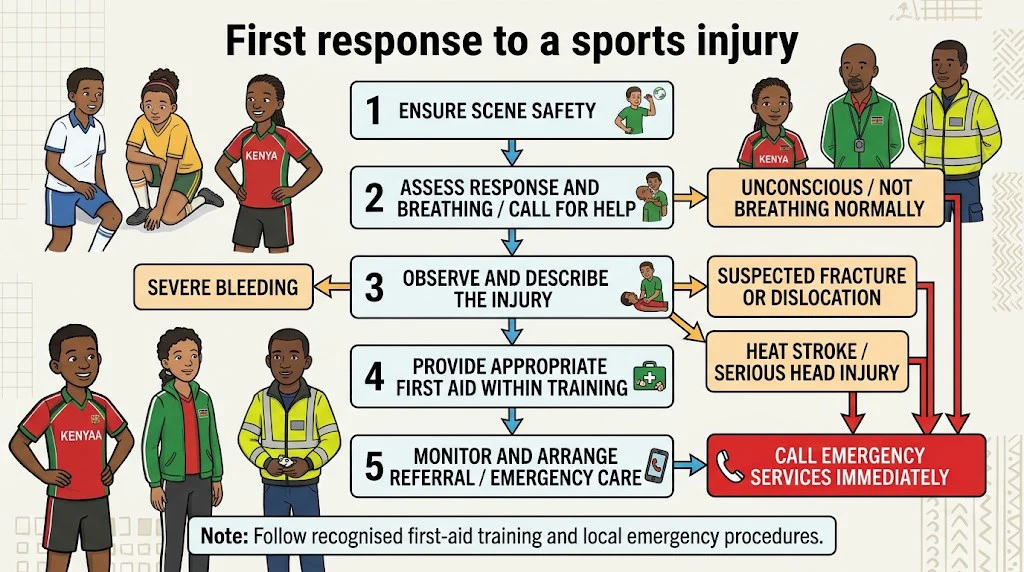
- Step 1: Assess the situation and ensure safety: Before approaching the injured person, check whether the area is safe. Hazards may include moving vehicles, active play, electrical equipment, fire, unstable structures, broken glass, or aggressive behaviour. Do not enter an unsafe area. Ask someone to stop the activity, secure the area, and call for assistance.
- Step 2: Assess the casualty and call for help: Check whether the person responds. If unresponsive or not breathing normally, call emergency services immediately and follow recognised CPR and automated external defibrillator (AED) training if available. Ask a specific person to call for help and another to bring the first-aid kit. If the person is conscious, introduce yourself, explain what you intend to do, and seek consent where possible.
- Step 3: Recognise and describe the injury: Observe what happened and what the person reports. Note the location of pain, visible bleeding, swelling, deformity, skin colour, movement difficulty, and any changes in alertness or breathing. Ask simple questions about the incident. Do not force movement, manipulate a joint, or attempt to prove whether a bone is broken.
- Step 4: Provide appropriate first aid: Use only procedures for which you have been trained. Protect the injured area, control serious bleeding where appropriate, keep the person comfortable, and avoid unnecessary movement. For serious injuries, prioritise emergency assistance rather than attempting complex treatment.
- Step 5: Monitor and arrange onward care: Continue observing the person’s condition and reassure them. Record relevant details such as time, mechanism of injury, symptoms observed, and first aid provided. Arrange appropriate medical assessment or emergency transfer. Do not allow a learner with a potentially serious injury to return to play simply because they say they feel better.
1.6.7 First Aid for Common Sports Injuries
- Sprains and strains: Stop the activity and avoid movements that cause pain. Support the affected area in a comfortable position. A wrapped cold pack may be used briefly to help reduce pain and swelling; never apply ice directly to skin. A compression wrap may be used by someone who knows how to apply it without restricting circulation. Seek medical assessment when pain is severe, the person cannot use the limb, symptoms worsen, or a fracture cannot be ruled out.
- Suspected fracture: Stop activity and keep the injured person still. Support the limb in the position found using suitable padding or support if trained. Do not straighten a deformed limb, push exposed bone back into a wound, or allow the person to bear weight. Cover an open wound with a sterile dressing if available without pressing directly on exposed bone. Arrange urgent medical care.
- Suspected dislocation: Do not attempt to relocate the joint. Keep it supported in the position found, avoid unnecessary movement, and obtain urgent medical assistance. Do not delay referral while attempting to test the joint.
- Sunburn: Move the person out of direct sunlight. Cool the affected skin with cool water or a cool damp cloth. Do not apply ice directly to the skin or burst blisters. Encourage fluids if the person is alert and able to drink. Seek medical advice for severe pain, extensive blistering, fever, confusion, fainting, or other concerning symptoms.
- Severe bleeding: Call for emergency help. If safe and appropriate, wear gloves or use a barrier and apply firm, direct pressure to the wound with a clean dressing. Do not remove an object embedded in the wound; apply pressure around it and wait for professional help. Follow formal first-aid training for life-threatening bleeding.
- Head injury: Any suspected concussion or significant head injury requires removal from play and medical assessment. Do not allow a learner to return to sport on the same day when concussion is suspected. Seek emergency help for loss of consciousness, seizure, repeated vomiting, worsening headache, confusion, weakness, unusual behaviour, or other serious signs.
- Heat-related illness: Stop activity and move the person to a cooler place. For suspected heat exhaustion, cool the person, loosen excess clothing, and seek medical advice, especially if symptoms persist or worsen. Suspected heat stroke is an emergency: call emergency services and begin rapid cooling immediately according to recognised first-aid guidance. Do not give fluids to a person who is confused, unconscious, or unable to swallow safely.
1.6.8 First-Aid Equipment and Supplies
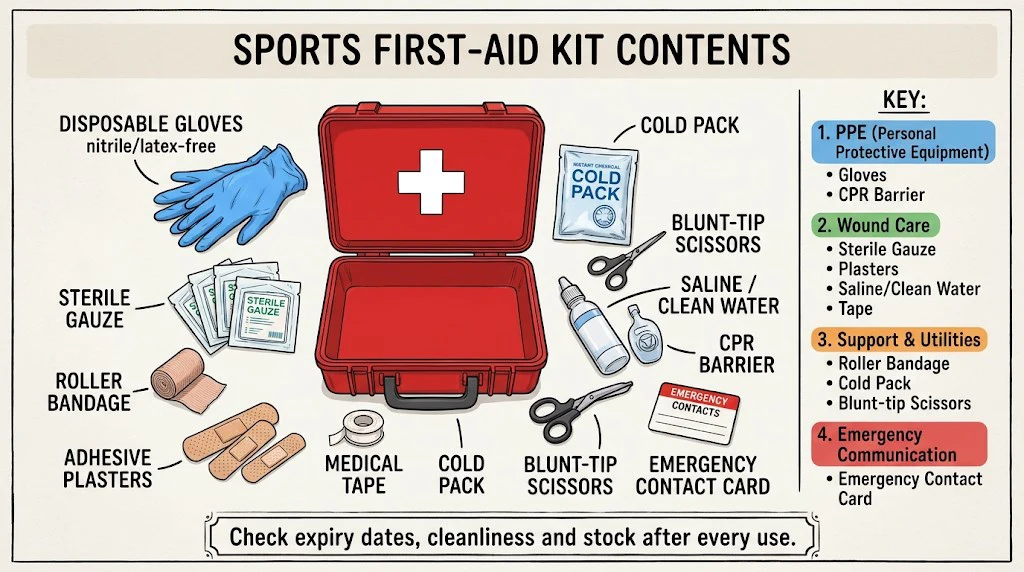
A first-aid kit contains basic supplies used to manage minor injuries and provide initial support while further care is arranged. Contents should be appropriate to the activity, number of participants, environment, and likely risks. Supplies should be clean, in date, clearly organised, and stored where responsible adults can access them quickly.
Item |
Purpose |
Important consideration |
|---|---|---|
Disposable gloves |
Reduce contact with blood and body fluids. |
Use suitable size and dispose safely after use. |
Sterile gauze / wound dressings |
Cover wounds and assist with bleeding control. |
Keep sterile packaging intact until use. |
Roller bandages |
Secure dressings or provide support. |
Do not wrap so tightly that circulation is impaired. |
Adhesive plasters |
Cover small cuts and abrasions. |
Use clean, suitable sizes and replace if wet or dirty. |
Medical tape |
Secure dressings. |
Avoid application that damages skin or restricts circulation. |
Cold pack |
Provide short-term cooling for some soft-tissue injuries. |
Use a cloth barrier; never place ice directly on skin. |
Scissors |
Cut tape, clothing or dressings when needed. |
Keep safely stored and use under supervision. |
Saline / clean water |
Rinse minor wounds or eyes when appropriate. |
Use clean supplies and follow training. |
CPR barrier |
Provide a barrier during rescue breaths where trained. |
Use according to recognised CPR training. |
Emergency contact list |
Supports timely communication. |
Keep numbers current and visible. |
1.6.9 Developing a Basic First-Aid Resource for School Sport
Learners can help organise a first-aid resource under teacher supervision. They should not prepare medicines, sterile supplies, or medical devices unless authorised and trained. Improvised materials may help with simple support in a demonstration, but they should never replace appropriate medical equipment in a real emergency.
- Identify the sports and recreation activities and list likely hazards.
- Agree on the responsible adult or trained first aider for each activity.
- Prepare an inventory of suitable first-aid supplies and emergency contact information.
- Check that supplies are clean, intact, in date, and stored in a clearly marked container.
- Identify the nearest route for emergency access and the procedure for contacting help.
- Brief participants on how to report an injury and where the first-aid point is located.
- After an activity, record incidents, replace used supplies, and review safety concerns.
1.6.10 Injury Prevention in Sport and Recreation
Injury prevention involves identifying risks and taking action before harm occurs. No activity is completely risk-free, but good planning can reduce avoidable injuries. Prevention should be part of every training session, competition, and recreation event. You can explore more on planning safe environments in Risk Management in Sports.
Prevention measure |
How it reduces risk |
Example |
|---|---|---|
Warm-up |
Prepares the body for activity. |
Begin with easy movement and specific practice. |
Correct technique |
Reduces unnecessary joint or tissue strain. |
Teach safe landing and lifting movement. |
Progressive training |
Avoids sudden increases in training load. |
Increase duration or intensity gradually. |
Suitable equipment |
Reduces hazards from poor fit or damaged resources. |
Use appropriate footwear and inspected equipment. |
Safe playing surface |
Reduces slips, trips and impact hazards. |
Remove debris and avoid wet or uneven areas. |
Hydration and rest |
Supports normal body function and recovery. |
Provide water breaks and recovery days. |
Supervision |
Helps identify unsafe behaviour and respond early. |
Ensure a responsible teacher or coach is present. |
Protective equipment |
Reduces certain impact or contact risks. |
Use properly fitted helmets where required for cycling. |
Weather awareness |
Reduces exposure to heat, sun or severe weather. |
Adjust timing, provide shade and stop when unsafe. |
Safeguarding and fair play |
Reduces harm from bullying, reckless conduct or deliberate fouls. |
Enforce rules and a code of conduct. |
1.6.11 Road Safety During Recreation Activities
Road crashes can occur when recreational activities are conducted near roads or when participants travel to an activity. Schools should avoid using roads as playing areas. A walking or cycling event requires route assessment, supervision, visibility, and clear procedures.
- Select routes with footpaths, safe crossings, and low exposure to fast-moving traffic.
- Obtain appropriate permissions and inform parents or guardians where required.
- Use trained adult supervision and agreed group leaders.
- Ensure participants wear visible clothing and use suitable protective equipment.
- Brief participants on crossing procedures, road signs, and safe group movement.
- Keep emergency contacts, first-aid supplies, and a communication plan available.
- Stop or change the activity if traffic, weather, or visibility makes the route unsafe.
1.6.12 Worked Examples and Scenarios
Worked Example 1: Ankle Injury During Football
A learner lands awkwardly after jumping for the ball. The ankle becomes painful and swollen, and the learner cannot comfortably put weight on it. Response: Stop play, prevent the learner from walking on the injured ankle, support the person in a comfortable position, and arrange medical assessment. A wrapped cold pack may be used briefly for comfort if appropriate. Do not assume it is only a sprain because a fracture may produce similar signs.
Worked Example 2: Suspected Shoulder Dislocation
During a game, a learner falls onto the shoulder. The joint appears unusually shaped and the learner reports severe pain. Response: Stop activity, do not attempt to push the joint back into place, support the arm in the position found, and arrange urgent medical care. Monitor the learner and do not leave them alone.
Worked Example 3: Sunburn After Outdoor Activity
A learner has painful, red skin after spending several hours in direct sunlight. Response: Move the learner into shade, cool the skin with cool water or a cool damp cloth, encourage fluids if fully alert and able to drink, and monitor for worsening symptoms. Seek medical advice for severe or extensive burns, blistering, or systemic symptoms. Plan future events with shade, protective clothing, and sun protection.
Worked Example 4: Recognising a Chronic Injury
A runner reports lower-leg pain that has gradually increased over several weeks of training. Response: Stop or reduce the activity that aggravates the pain and arrange assessment by an appropriate health professional. Review training load, recovery, footwear, and surface with qualified guidance. Do not encourage the learner to continue running through persistent pain.
1.6.13 Practical First-Aid Learning Activity
Under teacher supervision, learners can practise safe, non-invasive first-aid scenarios using training materials. The purpose is to learn scene safety, communication, calling for help, protecting an injured area, and explaining why professional care may be needed. Learners should not practise manipulating joints, setting bones, or performing procedures beyond their training.
Scenario |
Learner task |
Expected safety behaviour |
|---|---|---|
Minor abrasion |
Demonstrate hand hygiene, gloves and explanation of wound covering. |
Avoid touching wound with bare hands; use clean supplies. |
Suspected sprain |
Explain stopping activity, supporting the person and arranging assessment. |
Do not force movement or allow return to play. |
Suspected fracture |
Explain keeping the person still and calling for help. |
Do not straighten the limb or push exposed bone. |
Heat illness |
Identify warning signs and explain cooling and escalation. |
Recognise suspected heat stroke as an emergency. |
Roadside incident |
Identify scene hazards and explain keeping bystanders safe. |
Do not enter traffic or an unsafe scene. |
Revision Questions
- Differentiate acute and chronic injuries and give three examples of each.
- Explain the difference between a sprain and a strain.
- Describe signs that may indicate a fracture or dislocation.
- Explain how sunburn can affect a learner in outdoor sport and how it can be prevented.
- Define first aid and state its main purposes.
- Outline the general steps in responding to a sports injury.
- Explain why a suspected dislocation should never be pushed back by an untrained person.
- List eight items in a school sports first-aid kit and state their uses.
- Explain ten measures that can prevent injuries during sports and recreation.
- Describe road-safety measures for an organised school walk or cycling activity.
- Explain why first aid should be provided only within the helper’s level of training.
Summary of Sub-Strand 1.6
- Acute injuries occur suddenly, while chronic or overuse injuries develop gradually through repeated stress.
- Common injuries include sprains, strains, fractures, dislocations, and sunburn.
- A sprain affects a ligament; a strain affects a muscle or tendon.
- A suspected fracture, dislocation, serious head injury, severe bleeding, or heat stroke requires urgent professional help.
- First aid provides immediate assistance but does not replace medical diagnosis or treatment.
- The safe response involves checking scene safety, assessing the casualty, recognising warning signs, providing appropriate help, and arranging referral.
- First-aid kits should be suitable, maintained, accessible, and managed by responsible people.
- Injuries can be reduced through warm-up, correct technique, gradual progression, suitable equipment, safe surfaces, hydration, rest, and supervision.
- Road safety is essential during outdoor recreation and when travelling to sporting activities.
Compiled and reviewed for Education.co.ke by Fred ArapToo (B.Ed. Physics & Chemistry, Egerton University; M.Ed. Education Administration candidate, University of Kabianga; Experience AI Certified Educator — Google DeepMind, Raspberry Pi Foundation & YSK, 2025; national KSEF facilitator, patron and evaluator; EdTech and open-access education platforms innovator; secondary school science educator with 15+ years of experience).
Looking for more resources?
- Revision & past papers: Teacher.co.ke | Education.co.ke | Teacher.ac
- Career pathways & university placement guide: CareerMap.co.ke
- School management systems & related digital applications: Contact us via Teacher.co.ke or ShuleMax.co.ke